JER.

It’s Not
a Joke.

JER
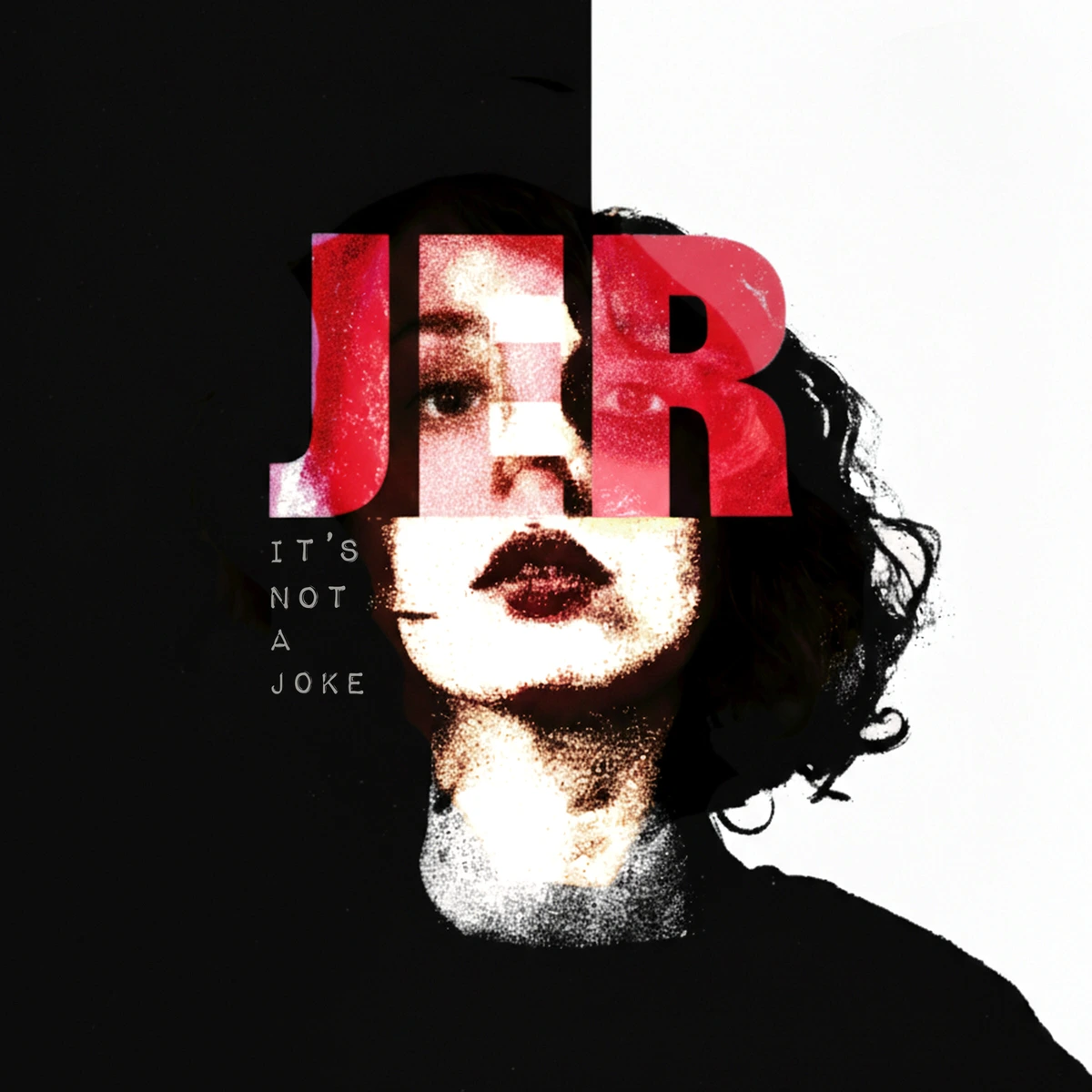
It’s Not a Joke — album cover by JER

Debut album · INFR Records

Listen on streaming

Bahia / Toronto

Angu

Track 01 of 08 · ready

0:003:24
    Angu

    Angu, batuque, muamba, fubáCornmeal, Drumbeat, Mayhem, Cornmeal

    Angu, batuque, muamba, fubáCornmeal, Drumbeat, Mayhem, Cornmeal

    Urucubaca, urucubaca, urucubacaSpell, Spell, Spell

    Urucubaca, urucubaca, urucubacaSpell, Spell, Spell

    Urucubaca, urucubacaSpell, Spell

    Angu, batuque, muamba, fubáCornmeal, Drumbeat, Mayhem, Cornmeal

    Angu, batuque, muamba, fubáCornmeal, Drumbeat, Mayhem, Cornmeal

    Urucubaca, urucubaca, urucubacaSpell, Spell, Spell

    Urucubaca, urucubaca, urucubacaSpell, Spell, Spell

    Urucubaca, urucubacaSpell, Spell

    The album

    It’s Not a Joke is JER’s eight-track debut album, arriving October 30, 2026 on INFR Records. Born in Bahia and based in Toronto, the Brazilian-Canadian artist and producer brings places, voices and collaborators from both sides of that journey into the same room. This is not a record that smooths those differences away: atabaques and hand percussion meet drum programming, synth bass and treated voices; guitar and saxophone leave space for the grain of an electronic texture.

    Angu begins with the sound and language of Bahia, its atabaques and voices set against fractured beats. The title track turns a playful phrase into an insistent question, while Jia Má gives a song by Uyatã Rayra a dense, physical setting. Holy moves between gospel-inflected urgency and cold digital sound; MDMA pushes the guitars and beat harder. Desapareça then makes room for guitar, oud and silence. Rosa Sônica began with Bruno Capinan marking out a rhythm while JER found a melody, and opens into trombone and synth.

    The sequence ends with Último Som: two drummers, May Akanuma’s saxophone and an ending that does not force a resolution. Across the album, JER’s voice and production hold the acoustic and the processed close enough to change one another. The movement from Angu’s crowded opening to that final open space gives the record its shape, without asking either Bahia or Toronto to stand in for the other.

    Track by track

    01

    Angu

    The album opens with the language of Bahia: angu, batuque, fubá, urucubaca. Iuri Passos’s atabaques drive the track, joined by Antonio Neves on trombone and flutes, Pupillo on beats, and João Leão on keys. An excerpt from Roberto Pires’s 1961 film A Grande Feira becomes part of the recording.

    02

    It’s Not a Joke

    A woman who hasn't arrived. A donkey at the races. The headless mule, the Saci, Slipknot. Uyatã Rayra’s lyrics move from one unlikely image to the next, held together by a chorus that keeps asking the same question. JER delivers the words over Pupillo’s beats, guitar, percussion and Felipe Guedes’s Rhodes.

    03

    Jia Má

    A frog, a kiss, a little magic. Uyatã Rayra’s Jia Má has a chorus built to stay in your head. JER’s recording puts Chibatinha’s guitar alongside Pedro Dantas’s bass, Tuta and Ícaro Sá’s percussion, Pupillo’s beats and João Leão’s synths. The song keeps its mischief; the bass gives it teeth.

    04

    Holy (feat. Borelson)

    Holy features Borelson alongside JER, over synth bass, guitar and electronic beats. Vivian Kuczynski co-produced the track with JER and João Leão, contributing guitars, synthesizers and beats. The repeated invocation of “Holy” sits beside lyrics about wanting more, feeling out of place and trying to make peace with oneself.

    05

    MDMA

    Chibatinha’s distorted guitar cuts against Pupillo’s beats and João Leão’s synth bass. Xequerê percussion by Claudia Matias, Ediane Augusto Gonçalo and Maria do Carmo Pacheco adds another pulse. Written by Uyatã Rayra, MDMA is driven as much by the quick turns of its Portuguese lyrics as by its instrumentation.

    06

    Desapareça

    “Disappear before I forget you.” JER’s lyric is direct, and the recording leaves it room. Guitar and oud move alongside João Leão’s spare keyboards and effects, with JER’s voice at the centre. A quieter arrangement than much of the album, though the words are no less forceful.

    07

    Rosa Sônica

    JER and Bruno Capinan share the writing on Rosa Sônica. Its rolling syllables and melodic phrases meet Antonio Neves’s trombone, Léo Mendes’s guitar, Pupillo’s beats and João Leão’s synthesizers. The trombone stands out against the electronic arrangement, giving the song a sound of its own.

    08

    Último Som

    Thomas Harres and Dhaivat Jani play drums, João Leão handles keys, bass and beats, and May Akanuma plays saxophone. On an album full of words, percussion and restless rhythms, Último Som leaves its closing moments to the saxophone. The record ends without insisting on a grand finale.

    Press assets

    Biography

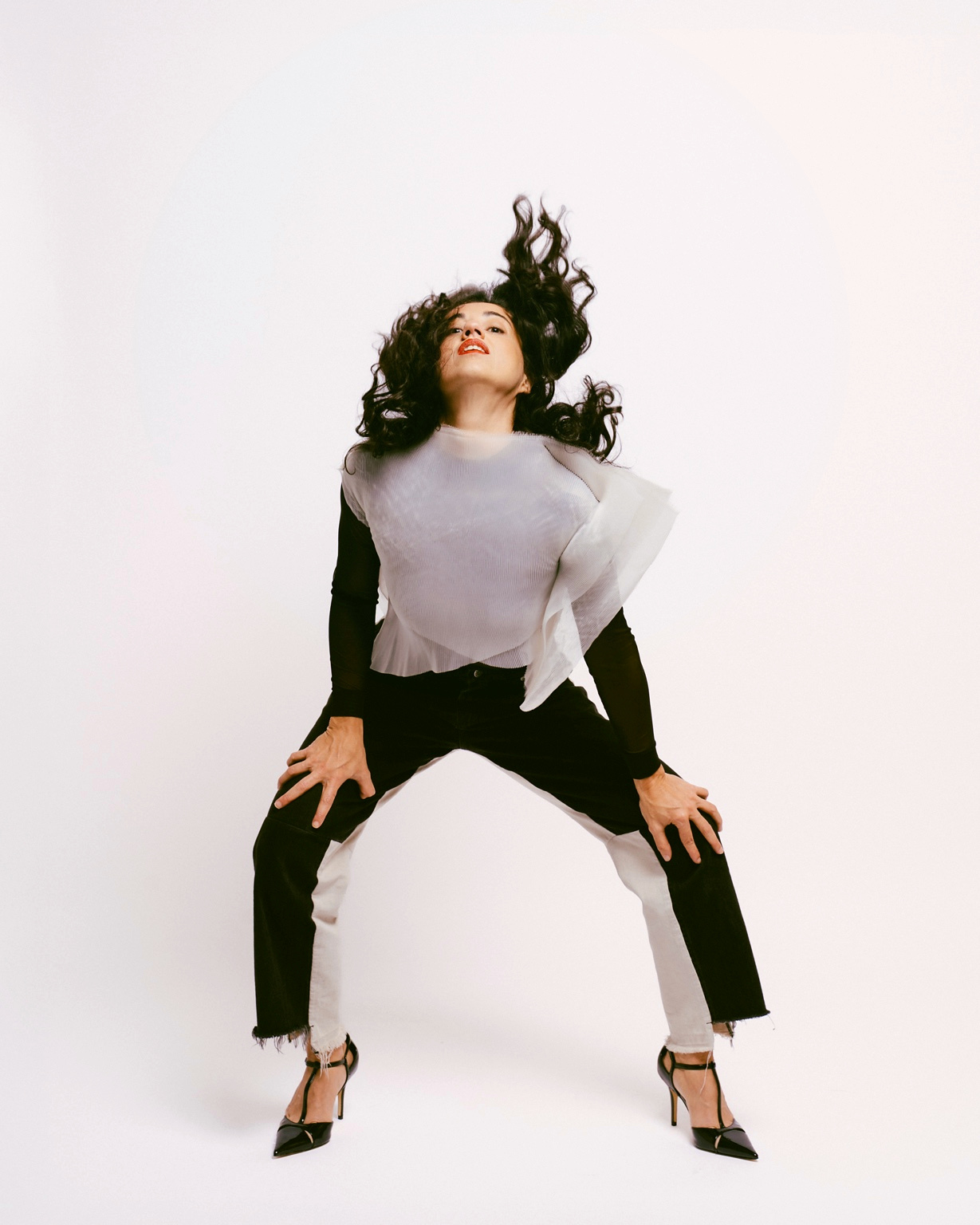
    JER is a singer, songwriter, producer and multidisciplinary artist from Bahia, Brazil, based in Toronto. Working across music, technology and visual art, she moves freely between songwriting and sonic experimentation. She has performed at Calgary Folk Music Festival, TD Toronto Jazz Festival and TD Music Hall.

    Her eight-track debut album, It’s Not a Joke, arrives October 30, 2026 on INFR Records. Co-produced by JER and João Leão, it features Chibatinha, Antonio Neves, Ícaro Sá and Thomas Harres, whose collective credits include work with Marisa Monte, BaianaSystem and Gal Costa. The album was mixed by Arcade Fire collaborator Mark Lawson and mastered by Grammy winner Justin Gray.

    Album credits

    JER and João Leão produced all eight tracks; Vivian Kuczynski co-produced Holy.

    Angu

    Writing
    JER
    Vocals & sampling
    JER
    Atabaques & percussion
    Iuri Passos
    Trombone & flutes
    Antonio Neves
    Drums & beats
    Pupillo
    Bass
    Pedro Dantas
    Synths & keys
    João Leão
    Film excerpt
    Roberto Pires, A Grande Feira (1961)

    It’s Not a Joke

    Writing
    Uyatã Rayra
    Vocals, FX & textures
    JER
    Guitar
    Leonardo Caribe Ribeiro Mendes
    Beats
    Pupillo
    Percussion
    Tuta · Ícaro Sá
    Synth bass & keys
    João Leão
    Rhodes
    Felipe Guedes

    Jia Má

    Writing
    Uyatã Rayra
    Vocals
    JER
    Guitar
    Chibatinha
    Bass
    Pedro Dantas
    Beats
    Pupillo
    Percussion
    Tuta · Ícaro Sá
    Synths & keys
    João Leão

    Holy (feat. Borelson)

    Writing
    JER
    Vocals
    JER
    Featured artist
    Borelson
    Beats, synths & guitars
    Vivian Kuczynski
    Synth bass & keys
    João Leão

    MDMA

    Writing
    Uyatã Rayra
    Vocals
    JER
    Guitar
    Chibatinha
    Beats
    Pupillo
    Synth bass & synths
    João Leão
    Xequerê & percussion
    Claudia Matias · Ediane Augusto Gonçalo · Maria do Carmo Pacheco [Comunidade Alto Xé do Pinho - REC - PE]

    Desapareça

    Writing & vocals
    JER
    Guitar & oud
    Demetrious Petslaki
    Synths, keys & FX
    João Leão

    Rosa Sônica

    Writing
    JER · Bruno Capinan
    Vocals
    JER
    Guitar
    Leonardo Caribe Ribeiro Mendes
    Trombone
    Antonio Neves
    Beats
    Pupillo
    Synths, keys & bass
    João Leão

    Último Som

    Writing & vocals
    JER
    Drums & beats
    Thomas Harres
    Additional drums
    Dhaivat Jani
    Synths, keys, beats & bass
    João Leão
    Saxophone
    May Akanuma

    With the support of

    Album artwork

    Artwork & cover
    JER (Jerusa Leão)

    Lead single dossier

    Notes & context

    Notes & context

    Folklore and wordplay

    The lyric places the Saci and the Mula sem Cabeça alongside everyday expressions for a racing heart, a head that goes tilt and the ticking of a clock.

    Sound play

    The lyric plays with sounds such as toque, jóquei and joke. The image of a donkey at a racecourse adds to the humour.

    “Ô mulher”

    The translations keep “Ô mulher”, the Portuguese call repeated in the chorus.

    The Saci

    The Saci is a mischievous, one-legged Black character from Brazilian folklore, usually shown wearing a red cap. The repeated S sounds in the verse are part of its rhythm.

    The Mula sem Cabeça

    The Mula sem Cabeça, or Headless Mule, is a figure from Brazilian folklore: a woman cursed to become a headless mule, often depicted with fire where her head would be.

    Press / Radio

    For interviews, airplay, reviews and press assets.